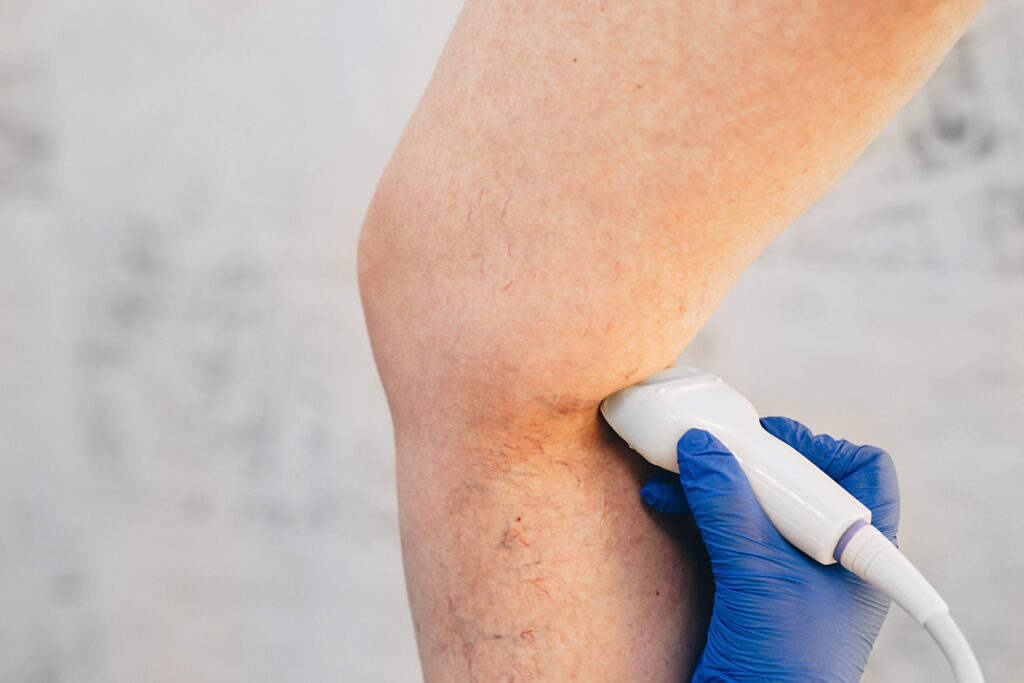
Some problem veins are not easy to see on the surface, but they can still contribute to aching, swelling, heaviness, and visible changes in the veins. Ultrasound-guided foam sclerotherapy is a minimally invasive treatment that uses real-time ultrasound imaging to guide a foam medication into targeted veins. The goal is to close diseased veins so blood can reroute through healthier pathways.
At Hill Country Vein Center, this treatment is used for appropriate patients in New Braunfels, TX, and the San Antonio area after careful diagnostic evaluation. Dr. Mark Kneuper’s experience with office-based vein treatment helps guide when foam sclerotherapy may be useful, especially for veins that require more precision than visual treatment alone can provide.
What Is Ultrasound-Guided Foam Sclerotherapy?
Ultrasound-guided foam sclerotherapy is a vein treatment that uses a foam sclerosant to close selected problem veins. The medication irritates the inside lining of the vein, causing the vein walls to seal together. Over time, the treated vein is absorbed by the body, and blood moves through healthier veins.
The ultrasound-guided approach allows the provider to see veins beneath the skin during treatment. This makes it useful for certain deeper veins, feeding veins, or veins that are difficult to treat with surface-level visual guidance alone.
What Does Ultrasound-Guided Foam Sclerotherapy Treat?
Foam sclerotherapy may be recommended for several vein concerns, depending on vein size, location, anatomy, symptoms, and ultrasound findings. It may be used alone or as part of a broader vein treatment plan.
Ultrasound-guided foam sclerotherapy may help treat:
-
Varicose veins or reticular veins
-
Veins related to chronic venous insufficiency
-
Residual veins after another vein procedure
-
Veins that contribute to aching, swelling, heaviness, or fatigue
-
Certain deeper or less visible veins that require ultrasound guidance
-
Selected refluxing veins that are appropriate for injection treatment
A vein evaluation helps determine whether foam sclerotherapy, radiofrequency ablation, VenaSeal™ Closure, microphlebectomy, or another option is the best fit.
How Does Ultrasound-Guided Foam Sclerotherapy Work?
The procedure is performed in the office. Before treatment, ultrasound imaging is used to identify the targeted vein and guide accurate needle placement. The foam medication is then injected into the vein while the provider monitors the treatment area with ultrasound.
The process generally includes:
-
Ultrasound evaluation to locate and assess the vein being treated
-
Skin cleansing and preparation before the injection
-
Needle placement into the targeted vein using ultrasound guidance
-
Foam sclerosant injection to close the problem vein
-
Compression or bandaging to support the treated area
-
Walking and aftercare instructions to encourage healthy circulation
Patients may feel mild pressure, tingling, or temporary discomfort during the injection. Most people are able to walk shortly after treatment and return to normal light activity the same day.
Recovery After Ultrasound-Guided Foam Sclerotherapy
Recovery is usually straightforward. Compression stockings may be recommended for a period of time after treatment to support circulation and help the treated vein close properly. Patients are often encouraged to walk, but strenuous exercise may need to be avoided briefly.
Temporary tenderness, bruising, redness, firmness, or mild swelling can occur near the treated vein. Results develop gradually as the vein closes and fades. Some patients need more than one session, depending on the number, size, and location of the veins being treated.
The Benefits Of Ultrasound-Guided Foam Sclerotherapy
Ultrasound-guided foam sclerotherapy allows treatment of veins that may not be visible on the surface. This added guidance can improve precision and help address veins that contribute to symptoms or visible vein patterns.
Potential benefits include minimal downtime, office-based treatment, no general anesthesia, and improvement in symptoms such as aching, heaviness, swelling, or discomfort when those symptoms are related to the treated veins. It can also be a useful follow-up treatment after other vein procedures.
When To See A Vein Specialist
You should consider seeing a vein specialist if you have varicose veins, reticular veins, swelling, heaviness, aching, cramping, or visible veins that continue to worsen. Symptoms that become more noticeable after standing or sitting for long periods may suggest underlying vein disease.
A specialist can use ultrasound imaging to determine whether your symptoms are connected to refluxing or diseased veins and whether ultrasound-guided foam sclerotherapy is appropriate.
Why Choose Hill Country Vein Center For Ultrasound-Guided Foam Sclerotherapy?
Foam sclerotherapy requires accuracy, especially when treating veins that are not clearly visible at the surface. Hill Country Vein Center uses ultrasound guidance to evaluate vein anatomy, identify the treatment target, and support precise injection planning.
Dr. Mark Kneuper’s background as a board-certified General Surgeon supports a careful, procedure-focused approach to vein care. For patients with deeper veins, residual veins, or vein patterns that require more than visual treatment, Hill Country Vein Center provides treatment planning based on imaging, symptoms, and long-term circulation health.
Ultrasound-Guided Foam Sclerotherapy In New Braunfels, TX
Ultrasound-guided foam sclerotherapy can be an effective option for treating selected problem veins with precision and minimal downtime. If you are dealing with visible veins, aching, swelling, heaviness, or other symptoms of vein disease, Hill Country Vein Center in New Braunfels, TX, can help you understand your options.
Call Hill Country Vein Center at (830) 625-6258 today to schedule a consultation. The practice serves patients from New Braunfels, San Antonio, and surrounding Hill Country communities with focused evaluation and ultrasound-guided vein treatment.